


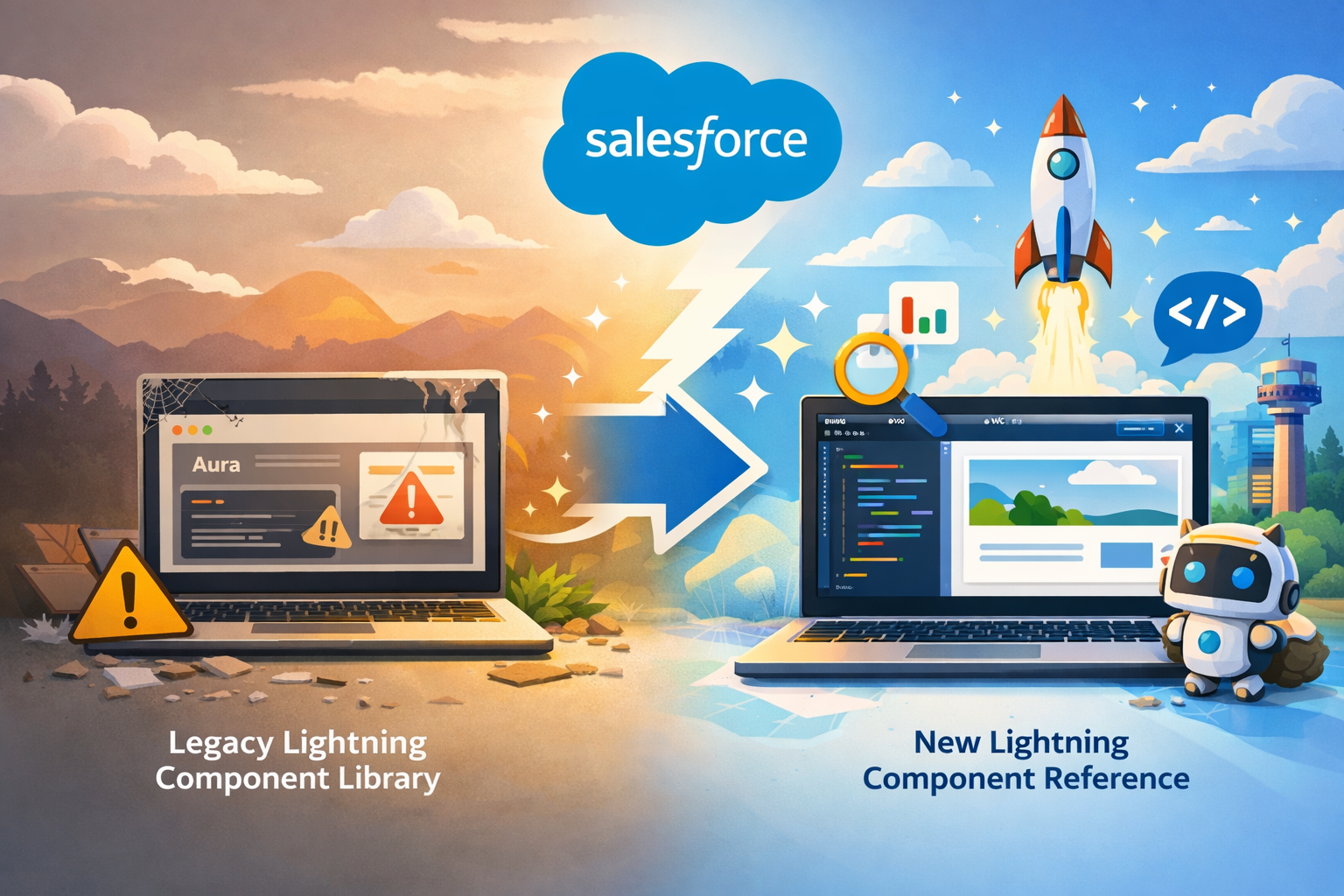
Salesforce will retire the old Lightning Component Library, changing how developers access Lightning component documentation. This update aims to improve your experience. Here’s what you should know.
Why the Change?
The old Lightning Component Library could no longer meet developers’ needs. Several problems made a replacement necessary:
Technical Debt and Limitations
- The old library used an Aura-based runtime, which made updates difficult and kept components on an outdated SLDS version.
- Examples in the documentation became outdated and no longer matched the components used in production.
- Because the format was static, it limited interactivity and made learning slower.
- Content updates took too long, which led to gaps between documentation and new releases.
- The old system couldn’t support new features such as Agentforce grounding or tools powered by AI.
The New Lightning Component Reference
The new Lightning Component Reference solves these problems and offers a big improvement for developers.
Key Improvements
1. Modern Runtime Environment
- Examples now run in the Lightning Web Component (LWC) runtime environment.
- Components now use SLDS 2 styling and reflect the latest releases.
- Examples now closely match what you see when working with components.
2. Interactive Learning Experience
- You can now edit code directly in your browser and see results right away using the Lightning Mini Playground.
- Try out different component properties and see the results instantly.
- You don’t need to set up a full development environment just to test a component.
3. Faster Documentation Updates
- The new system allows for more frequent updates to the content.
- Documentation now stays up to date with actual releases.
- You can access new features and updates more quickly.
4. Enhanced Discoverability
- The new navigation system offers a completely redesigned experience.
- The platform now provides improved search functionality.
- The platform now organizes component categories and use cases more effectively.
5. Future-Ready Architecture
- The new platform is built to support Agentforce grounding.
- It is designed to create a unified experience for developers and agents.
- The platform is ready for AI-powered development tools.
6. Modern Developer Experience
- Code examples now support both dark and light modes.
- Readability and accessibility have been improved.
- The design is now mobile-responsive.
What This Means for Developers
Immediate Actions Required
- Update your bookmarks to the new Lightning Component Reference at https://developer.salesforce.com/docs/platform/lightning-component-reference. Make sure you can access all the documentation you need at this new site.
- Review your team’s internal documentation and wikis for any links to the old Component Library. Update all references to point to the new Lightning Component Reference.
- Take some time to explore the new reference to become familiar with the improved navigation and features.
Benefits for Your Development Process
- Faster Development: With interactive examples, you’ll spend less time switching between documentation and your IDE.
- More Accurate Information: Up-to-date examples help reduce confusion and save you time on debugging.
- Better Learning: The Lightning Mini Playground gives you hands-on experience without needing to set up a full development environment.
- Future-Proof: The new platform is built to grow along with Salesforce’s evolving capabilities.
Migration Timeline
To get started, begin using the new Lightning Component Reference right away. Meanwhile, watch for updates from Salesforce about when the old library will be retired, and adjust your workflow to make the transition smooth.
Additionally, if you find any issues or missing content, report them through the official Salesforce channels. Finally, share your feedback on the new experience to help Salesforce make further improvements.
Best Practices Going Forward
- Use the Interactive Playground: Try out the Lightning Mini Playground to experiment with components before adding them to your codebase.
- Stay Updated: The new platform gets updates more often, so check back regularly for new components and features. If you encounter issues or have suggestions for improvement, share them with Salesforce. Your input helps shape the platform.
- Update Team Resources: Make sure everyone on your development team knows about the change and where to find the new documentation.
Conclusion
Retiring the old Lightning Component Library and launching the new Lightning Component Reference marks a big step forward for Salesforce developers. While change can be challenging, this update brings real benefits: more accurate documentation, interactive learning tools, and a platform ready for the future.
In summary, the new Lightning Component Reference is more than just updated documentation. It is a modern tool that helps you become more productive and build better Lightning applications. Explore it, update your workflows, and enjoy the improved developer experience.
Resources:


Leave a Reply